On Mental Health
[Given by Emily Juchau at the Back-to-School Fireside for Parents, August 2015.]
The Juchau family doesn’t believe in “grounding.” When we get in trouble, we have to speak at stake events.
I’d like to start out by telling you a happy story. About ten months ago, my family went on a brief trip to Disneyland. And that’s the end of the happy part of the story; it’s all terrible from here on out. When you go to Disneyland, you don’t really expect to leave with the kind of life lessons you can talk about in church, but that’s just a reminder that horrible things can happen to you anywhere. Constant vigilance.
Anyway, we were all looking forward to the trip, because it’s Disneyland, the alleged “happiest place on Earth.” I was especially excited because my job was and is pretty high-stress. Disneyland seemed like the perfect way to de-stress, especially considering that I’d been feeling anxiety for about a month before the vacation. Just little, uncomfortable moments when I experienced fear when there was nothing to be afraid of, but it was manageable, and I figured that by getting out of Utah for a while I might also get out of my own head.
To my eternal chagrin—and this is an example of the kind of classic irony that would make my life a great sitcom—the opposite happened. Instead of feeling better, I felt worse, and two days into our trip, while we were standing in line for a ride, at Disneyland, I experienced my first-ever full-fledged panic attack.
It was horrible. I was weak and nauseated and cold—my whole body was shaking, and I thought I might faint or throw up or drop dead. It was so terrifying that my parents took me out of the park to a nearby Urgent Care. There, the nurses took samples of my blood and an EKG, and the doctor diagnosed me with a basic panic disorder. I remember that he came into the room where I was waiting with my parents to receive this information, and he said, “Well, Emily, what in the world are you so worried about?”
At the time, I was too ill to think clearly. If I’d been in my right mind, I may have responded, “Well, doctor, I’m a junior in college studying English in a world where an English degree won’t get you anywhere. The cost of tuition is rising, and so are nationwide unemployment rates. I work in a field that is shrinking more and more by the minute. I don’t know why I’m shaking; I don’t know why I want to vomit; I wish my body would remember how to breathe. Meanwhile the Ebola virus is running rampant on the other side of the world, earthquakes ravage and ruin lives in Chile, China, and Nepal, and you can’t even go to a movie theater or a first grade classroom without wondering whether you’ll get shot. What in the world, doctor, shouldn’t I be worried about?”
What I actually said was something like “Ebola and stuff.” So he prescribed Xanax, and I spent the last two days of our vacation in a drugged stupor.
I wish I could say that everything’s been uphill from there, but that isn’t true. Thanks to the marvels of modern medicine, I can take a little white pill every morning and feel just like normal. But it took a while to find the correct dosage, and until then I continued having occasional panic attacks, sometimes at home, sometimes at work, sometimes in class. Sometimes I still have moments of anxiety. I never found a good therapist, and in fact it’s nearly impossible to schedule a first-time appointment fewer than four months in advance, which ought to tell you exactly how prevalent my problem, and problems like mine, are.
Mental illness, I think, isn’t a topic we’re very comfortable with, despite how widespread it is. We live in a society that stigmatizes it. We know how to sympathize with cancer patients and amputees, but we freeze up when we hear about schizophrenia and bipolar disorder or anxiety and depression. Our brains are our most important assets; when they fail, even if it’s only for a minute, we get very nervous. We don’t even want to talk about our own struggles with mental health, because we worry that we’ll seem crazy or needy or pathetic. Although we’re social creatures who require the acceptance and warmth of others, we believe that if we stay silent, our minds will heal themselves and we can return to normal independently.
I will be the first to tell you that there are wounds you can keep to yourself. Frankly, no one cares about a papercut—you put a Band-Aid on it, it’ll be all better within two days, and complaining won’t get you anywhere. But for some reason, we have the same attitude about mental health, and that’s about the dumbest move we could possibly make, because you can’t fix a disorder of the mind with a Band-Aid. A depressed person cannot simply square their shoulders and smile to feel better, and someone having a panic attack can’t just tell themselves to calm down. When I’m having a panic attack, believe me, I would like nothing more than to calm down. The problem is that my brain won’t let me.
The Shakespeare play Hamlet comes to mind, probably because I’m an English major and I’ve studied it about seven times in the last three years. Hamlet’s mental health is one of the most important conflicts of the play; he seems to be depressed and struggles with thoughts of suicide. Early on in the play, long before his famous “to be or not to be” speech, he outlines what he’s going through, from his father’s death to his mother’s rapid remarriage, to how horrible and betrayed it makes him feel. He wishes that he could explain these problems but feels he can’t. “Break, my heart,” he says, “for I must hold my tongue.”
He chooses, fatally, as it turns out, for himself and for his friends and family, to stay silent. Break, my heart, for I held my tongue.
My friends, we are not meant to suffer in silence. God did not make us social creatures only so we could deny ourselves and each other sympathy and aid in our times of greatest need. We don’t read of many instances of mental illness in the scriptures, but I am reminded of the moments leading up to the Atonement, when Christ requested that Peter, James, and John stay awake and pray while he went into the garden to do what would amount to the greatest and most difficult act in the fabric of our universe. While Luke focuses on Christ’s physical agony and the drops of blood like sweat from his every pore, Matthew lingers on his emotional state, writing that Christ was “sorrowful” and “very heavy.” It seems to me that Christ, when he was about to face the greatest possible pain known to the history of the world, felt the kind of depression and fear that can render us immobile. And although he was empowered with divine strength and courage, he asked for help. He wanted his friends. He needed his Father. That didn’t make him weak or pathetic or needy. It serves as a reminder to me every day that some things I cannot and should not do alone.
I urge you to be open about your mental health, with yourselves, with each other, and especially with your children. Kids sort of believe that adulthood means having the solution to every problem and never needing help, when in fact the opposite is true. It’s the hope of every parent that their child or children will grow up to be happy and healthy and successful, and I promise you that they will be happier, healthier, and more successful for having grown up in a home where mental illness isn’t a secret, where they have learned to respond to their own inner problems and to empathize with the problems of others.
Your kids are entering a new school year, whether they do so as college students, like me, or as teenagers or even as smaller children, and although I am not a parent, it is my incredible privilege to give you parenting advice anyway.
First, promote mental wellness in your homes. The first thing my physician told me when I visited him about my anxiety was that I should focus on following a healthy diet, exercising regularly, and getting an appropriate amount of sleep. These steps are crucial. Our mental health is intertwined with our physical health. If you’ve ever pulled an all-nighter, you know that the following day is usually miserable—lack of sleep makes us irrational and cranky. But the symptoms of sleep deprivation are immediate, whereas improper dieting and a lack of exercise may take more time and have subtler results. Provide an example for your children by taking care of yourselves, and encourage them to do the same.
Our mental health is also related to our spiritual health. Does that mean every inactive church member suffers from depression? Not at all. Does that mean that having depression or anxiety makes you spiritually deficient? Again, no. When we talk of spirituality and spiritual health in the LDS Church, I think we often try to simplify it into an easy, understandable check list. Do you say your prayers every morning and night? Do you read your scriptures? Do you go to church on Sunday? Those steps are important, but remember that atheists can still be mentally healthy, and people who attend religious services every week can still be mentally unwell. What matters is your own, deeply personal relationship with God. If you feel that your spiritual health is suffering, despite checking everything off your to-do list, counsel with your bishop.
Remember also that you can’t force spirituality. If you have a child who is suffering a crisis of faith and no longer wishes to attend church, there are healthier ways—for you and your child—to deal with that than by compelling them to go. Be open and communicative with your children; listen to what they have to say; again, counsel with your bishop; and above all, remain faithful. Sometimes all we can do is wait.
Second, understand that adolescence is much harder now than it has ever been. In our economy, getting a job isn’t guaranteed. Understandably, we try to raise children to be hireable in an extremely competitive job market, so of course they have to go to college. But to get in to college, they’ll need a 4.0 GPA and a 36 on the ACT, not to mention AP classes and extracurricular activities. So your kids have to study whenever they’re not at mutual or after-school soccer practice or learning to play the harp or going to the literacy center to teach less privileged children how to read. And, they have to pay for college, while tuition costs are rising every year. So your kid also needs a part-time job, the second they turn sixteen and the state will let them work. And we wonder why they’re falling asleep in class!
As pressures rise, so does the importance of taking care of mental health. What’s the point of getting your kid into college if, after they get there, they struggle so much with depression or anxiety that it’s impossible to get out of bed in the morning to go to class? In our quest for a future, we’re forgetting the present, which should be unforgettable. Relax. Let your kids relax. Don’t expect perfection; don’t demand perfection. We all need a mental health day now and then, so I say, let the kids cut class and take them to a movie. Yeah, they need a job eventually, and they should get an education, but you can find a balance between building hireable adults and having happy children.
Third, mental illness isn’t always explainable. Sometimes it just happens. We might be doing everything medically possible to stay sane—exercising and sleeping well and eating correctly; we might be handling daily stresses in an appropriate way—but there can and will still be times in our lives and in the lives of our children when we simply become overwhelmed, the same way you might get the flu even if you’re washing your hands frequently. You can’t vaccinate yourself against mental illness. In Romans we read that “we glory in tribulations also: knowing that tribulation worketh patience, and patience, experience; and experience, hope; and hope maketh not ashamed.” I love the use of the word glory. We don’t just deal with hard things, we welcome them; we’re proud of them. It’s hard to remind yourself that tribulation worketh patience, and patience, experience when you’re in the middle of a panic attack, or when you feel so depressed that you can’t get out of bed. It’s hard, when we’re feeling broken, to remember that, in the words of Jeffrey R. Holland, “we chose to live in a fallen world where for divine purposes our pursuit of godliness will be tried again and again.” But we did choose this world, with all its tribulations, and for that we have great reason to hope.
Lastly, I ask you to take your children’s mental health very seriously. If your child came to you with a broken bone, you wouldn’t tell them to walk it off—you’d rush them to the hospital. Similarly, it is unacceptable to dismiss even the less evident signs of breakage in health as the result of hormones or teenage mood swings or just discouragement. Elder Holland says that depression, and here I will add that this could refer to any form of mental illness, is “an affliction so severe that it significantly restricts a person’s ability to function fully, a crater in the mind so deep that no one can responsibly suggest it would surely go away if those victims would just square their shoulders and think more positively.” Depression and anxiety are not exclusive to adulthood. And even if it is just a mood swing, listen and learn. Validate their feelings. Express love and acceptance, no matter what.
Your children may not always tell you what they are going through. That’s the Band-Aid mentality. As a teenager, the last thing you want to do is ask for help from your parents; you want to prove that you’re independent and can fix it by yourself. That’s why it’s critical to be open about your own mental health, and to display love and acceptance for those who struggle with mental illness. You can also be on the look-out for warning signs, which include fatigue, insomnia, consistent aches and pains, difficulty concentrating, and changes in personality. Though there’s no easy fix for mental illness, you can help by offering comfort, educating yourself on what they’re going through, and ultimately seeking help from professionals.
Mental illness isn’t anyone’s fault. It’s not an indicator of spiritual deficiency; it is not God’s way of punishing us. It is just something that happens—in the broad spectrum of mental malfunctions, many, many things can go wrong. In Biblical times, mental illness was understood in terms of demonic possession—Christ healed many men and women who were “possessed” by devils, which probably simply meant that they struggled with their mental health.
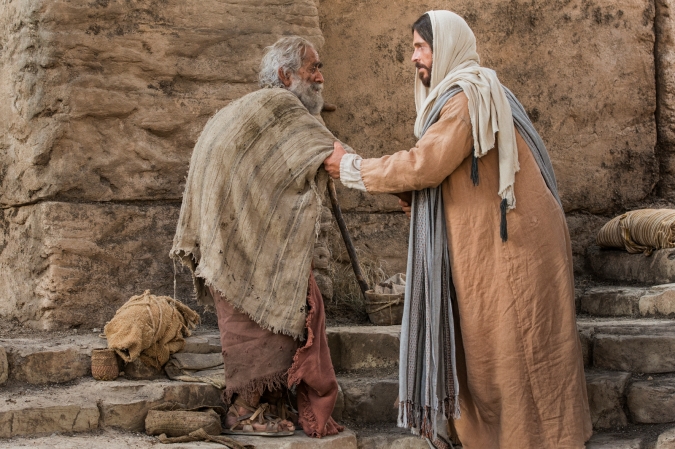
As Christ offered healing then, so does he now. In the ninth chapter of John, Jesus heals a blind man on the Sabbath. It’s one of the most beautiful stories in the Bible. It starts with Christ’s disciples indicating the blind man and asking, “Master, who did sin, this man or his parents, that he was born blind?”
And here I might point out that you can substitute blindness with any infirmity, physical or mental. Who did sin, this child or his parents, that he was born with major depressive disorder? That he was born with crippling anxiety, or debilitating phobias, or compulsions, or manic-depressive mood swings? Who did sin?
“Jesus answered, Neither hath this man sinned, nor his parents: but that the works of God should be made manifest in him.”
I can’t imagine being that man, being blind from birth, living in total darkness, believing that you’ll never see the sun, or the earth, or your loved ones’ faces. That you’ll never read, or walk in new places without help, or understand what people mean when they speak of color and light. I can’t imagine what it must have felt like, after a lifetime of blindness, to have an entire new world made accessible to you because one man stopped, and made clay, and rubbed it in your eyes. Sometimes mental illness can feel like total darkness, but I testify to you that He is the Light. He is the Way. He can open our eyes, and even if that’s not tomorrow, even if that’s not in the moment when we feel like we need it most, it will happen.
And until then, we live our flawed and broken lives so that the works of God should be made manifest in us, and we must remember that the paramount work of God was the Atonement of his Son, to which we have access every day. The Savior didn’t come here to save perfect people. He came here to save us, and for that reason, we need not be ashamed of our hope. He loves us; He died for us; He wants us to be happy, and He knows that long-term joy and divinity can only be achieved by doing hard things now. Our path may not always be easy, but the obstacles in our way are mere blips in the grand scheme of eternity, and with His help and grace, we can overcome them. Our future is so, so bright.
I testify of the love of our Savior and of our Heavenly Father. I testify that no matter what you are enduring, you are very much not alone. Winston Churchill said, “If you’re going through hell, keep going.” So keep going. You will find that your Savior walks beside you. I say these things in the name of Jesus Christ, amen.
Salvation is Free
[Given by Chris Juchau at Stake Conference April 27, 2015.]
In this general session of stake conference we have tried to focus on the Savior and on better understanding Him and our relationship to Him. I would like to add some of my thoughts. While the message of my talk is both important and serious, I admit that I smile a little bit at the protestant-sounding nature of what I’m going to say.
Some of you have heard me talk about my experience in eighth grade having my faith challenged by two teachers at my school. They were evangelical Christians and they believed that Mormons are not Christians at all—for a number of reasons, one important one of which is our belief in the importance of obedience and keeping the commandments as those concepts relate to salvation. They insisted that I believe in earning my way to heaven whereas they, in contrast (in their minds), rely solely on the Savior. They refused to believe that I worship and actually rely—wholly—on the same Jesus Christ that they do.
I have a dear evangelical Christian friend today who sometimes tells me that that I’ll be going to hell due to my lack of reliance on the Biblical Jesus. She tells me this with much genuine love and sincere concern for me. She prays for me and wants to help save me. I assure her that I love her, too; that I’ve already met all her requirements for salvation; and that the Mormon view of the alternatives to the Celestial Kingdom are much more attractive than her views of hell, so she needn’t worry about herself quite as much as she thinks I need to worry about myself.
Thankfully, my discussions with my protestant friends over the years have helped me clarify my own understanding of the Savior’s role and of my dependence on him. I understand better because I have listened to my teachers, including my parents and the scriptures and others and because I have tried to sincerely understand the position of others with contrary views.
If my talk today had a title, it would be taken from 2 Nephi 2:4 in which father Lehi says three very important words: “salvation is free.” I was delighted to hear President Uchtdorf’s conference talk three weeks ago titled “The Gift of Grace.” He said many of the things I’ve wanted to say in this conference—but with more eloquence and skill than I have. I will refer to some of his words as I go.
Let me begin by clarifying four important points…
First, the word “salvation” can have many different meanings, particularly within LDS doctrine. Most members will quickly agree with me that some forms of salvation, such as salvation from physical death through the resurrection, are, in fact, free. But some will just as quickly argue that other forms of salvation, such as exaltation, are not free. I believe, however, along with Bruce R. McConkie, who, referring to Lehi’s three words, posed an important question and then answered it, himself. He asked, “What salvation is free? What salvation comes by the grace of God?” And then he answered in typical Elder McConkie style, “With all the emphasis of the rolling thunders of Sinai, we answer: All salvation is free; all comes by the merits and mercy and grace of the Holy Messiah; there is no salvation of any kind, nature, or degree that is not bound to Christ and his atonement.” [Emphasis added by me.] Consistent with that message, President Uchtdorf, in his talk about “saving grace,” connected exaltation and becoming like our Heavenly Father to this grace.
Second, salvation is not earned. We do not and cannot earn salvation. President Uchtdorf said, “Even if we were to serve God with our whole souls, it is not enough. We cannot earn our way into heaven; the demands of justice stand as a barrier, which we are powerless to overcome on our own.” He continues, “Salvation cannot be bought with the currency of obedience; it is purchased by the blood of the Son of God. Thinking that we can trade our good works for salvation is like buying a plane ticket and then supposing we own the airline. Or thinking that after paying rent for our home, we now hold title to the entire planet earth.” In my own mind I liken the concept of salvation being earned to thinking that if I just try hard enough, I will be able to leap across the Grand Canyon on the strength of my own legs. No matter how good at leaping I may be or become, the result will be the same.
Third, just as salvation is free, so, too, are we free to choose as “agents unto ourselves.” We are not only free to “act for [ourselves],” but we are also free to “choose the way of everlasting death” or, “through the great Mediator of all men,” choose “the way of eternal life.” As the hymn says, “God will force no man to heaven.” So it is not true that all will be saved in every way, because even though I will not and cannot earn my salvation, even a free gift must be received, unwrapped, appreciated, and used if it is to have any value for the recipient. As the Savior asked in the D&C, “What doth it profit a man if a gift is bestowed upon him, and he receive not the gift?” My job, as it is your job, is to accept “the grace that so fully he proffers me.”
Fourth, though salvation is free in every form, because we have our agency, not all will take the necessary steps to receive it. Those who don’t will not qualify for all the blessings the Savior offers us and will therefore ultimately not have all those blessings available to them. The fullness of God’s grace will not be realized by all people.
When I say that salvation is free and that it comes solely from the grace of God, I am saying that no amount of righteousness on my part will get me across the Grand Canyon when I try to leap across it. My one and only way across the Grand Canyon is through the Savior, who, after I jump, will reach out and carry me across. Some members, I believe, need to quit beating themselves up because they’re only able to leap seven or eight feet of the way across the Grand Canyon when they feel like they should be leaping much further—perhaps even the whole way across. Many members would do better to accept the covenants that God makes with them—and His promises that He will get us across that divide.
So, why is it important that we understand that salvation is free and that it is not earned?
I find one answer to that question back in my experience with my born-again Christian friends. I was always struck by how happy they seemed. I used to think it was a happiness born out of ignorance or perhaps only an apparent happiness. But I have come to respect it as a genuine fruit of their sincere faith. They believe that Jesus has saved them and so they are happy. Which makes me wonder… Many latter-day saints seem quite happy to me. But many also seem too burdened by the weight of their own imperfections—which weight they seem to insist on carrying because they believe they must carry it and do not comprehend or accept that the Savior will carry it. They are reluctant to believe that God will accept them, let alone sanctify and save them, if their level of worthiness does not satisfy the Savior’s invitation to us to become perfected in Him.
I wonder if there aren’t more among us who are over-burdened by their short-comings than there are those rejoicing over the fact that the Savior has paid the price for their shortcomings. We sing the hymn, “How Gentle God’s Commands” over and over and it tells us to “cast your burdens on the Lord and trust his constant care.” It also tells us to find “sweet refreshment” and to “drop [our] burden at his feet and bear a song away.” I propose that we all do that.
Life is serious and there are serious things at stake and there is much to worry and stress about—no doubt about it. But I believe that too many of us hold on to too much of our burdens and are reluctant to accept the Savior’s offer to carry them for us and so are missing opportunities to be a little lighter in our step, a little less furrowed in our brows, a little less bent at our backs, and a little more inclined toward hope and optimism and faith and trust. Part of accepting the gift is just accepting the gift!
Now let’s return to the ideas that salvation being free doesn’t mean I don’t need to receive it—and to the idea that all the blessings of salvation are not ultimately extended to all. There are, in fact, things I must do. However, I would like to invite you today to adopt a little more of a New Testament view of what you must do and to have a little less of an Old Testament view of what you must do, so to speak.
In President Uchtdorf’s talk, he used the example of the Savior’s dinner with Simon the Pharisee to make this point. Simon tried to take comfort in his own righteousness, his own worthiness, his own strict adherence to the rules and the laws of the gospel. He seemed to think that those things were getting him across the Grand Canyon. And so he had a view of others that discounted them if they did not meet his false standards. He was indignant when a woman, a sinner in his view, came in and wept over the Savior’s feet, kissed his feet, and rubbed them with ointment.
The Savior said, “Simon, I have somewhat to say unto thee” and then he told this parable and taught its lesson:
“There was a certain creditor which had two debtors: the one owed five hundred pence, and the other fifty. And when they had nothing to pay, he frankly forgave them both. Tell me therefore, which of them will love him most? Simon answered and said, I suppose that he, to whom he forgave most. And he said unto him, Thou hast rightly judged.
And he turned to the woman, and said unto Simon, Seest thou this woman? I entered into thine house, thou gavest me no water for my feet: but she hath washed my feet with tears, and wiped them with the hairs of her head. Thou gavest me no kiss: but this woman since the time I came in hath not ceased to kiss my feet. My head with oil thou didst not anoint: but this woman hath anointed my feet with ointment. Wherefore I say unto thee, Her sins, which are many, are forgiven; for she loved much: but to whom little is forgiven, the same loveth little. And he said unto her, Thy sins are forgiven.”
The Savior taught repeatedly and clearly that love is the higher law. The first commandment is to love God. The second is to love our fellow man. It is our hearts that matter. Hence, Lehi said the Savior “offereth himself a sacrifice for sin… unto all those who have a broken heart and a contrite spirit; and unto none else….”
Receiving the gift means having and maintaining a broken heart and a contrite spirit. The scriptures also teach repeatedly and clearly that it is our hearts that matter. “The Lord looketh on the heart.” “I, the Lord, require the hearts of the children of men.” Those who fail to receive all of God’s gifts will do so by having hard hearts and therefore failing to yield their hearts in submissiveness to God. It will be their hearts, not their imperfections, that will damn them.
Why did the Savior tell the rich young ruler to go and sell all that he had and to distribute it to the poor? Is it because that so doing is a strict requirement for getting into heaven—or it is because the Lord wanted that young man to see clearly where his own heart was? Why did the Savior decry hypocrisy so much? Because hypocrisy comes from a false heart.
What is it like to have a broken heart and a contrite spirit? What does such a person do?
One thing is truly necessary if God is going to extend all forms of his grace to us: we must bind ourselves to the Lord in humility and submissiveness through ordinances and covenants and then strive with all sincerity to keep those covenants.
People with broken hearts and contrite spirits do not recoil at the notion of being obedient, nor at the notion of being submissive. They are humble and submissive.
People with broken hearts and contrite spirits see more clearly. They see more clearly who God is and why He loves them. They see more clearly who they are and why they are lovable. They see more clearly that in one sense they are lower than the dust of the earth and in another sense they are priceless—and they can accommodate both ideas at the same time.
People with broken hearts and contrite spirits see those things so clearly that they extend them to others. They see why God loves others, too, and why those others are lovable. They see why those people, too, are priceless—and so their hearts are soft and forgiving toward others, even those who annoy or frustrate or offend them.
People with broken hearts and contrite spirits earnestly strive to keep the commandments. Jesus said, “If ye love me, keep my commandments” and so people with broken hearts and contrite spirits humbly strive to do all that God wants them to do.
Did the Savior teach that we should be perfect? Yes. But the scriptures teach that we are to come unto Him and be perfected in Him. We are to have a broken heart and a contrite spirit—and then let Him perfect us. You will no more be able to perfect yourself than you will be able to earn your own salvation—and the sooner you accept the Savior’s offer to perfect you instead of you insisting on doing it all, yourself, the happier you’ll be. Go to the Church’s online scriptures and search for the phrase “perfect yourself” and you will get this message: “Sorry, your search returned no results.” That is telling!
Let me close just reminding you of one other brief story from the Savior’s life and one of his teachings…
In Luke 10, we read of the Savior visiting Mary and Martha, two sisters of Lazarus. Martha was busy – and stressed—trying to do all the right things. She was “cumbered” and became annoyed with Mary who sat with the Savior, listening to him. She became so annoyed that she asked the Savior to ask Mary to quit sitting around and get to work. The Savior responds,
“Martha, thou art careful [which could also be translated as worried or anxious] and troubled about many things:” Notice he does not condemn her for this, but he points it out and then he continues, “But one thing is needful: And Mary hath chosen that good part, which shall not be taken away from her.”
It’s interesting to me that the Savior says “one thing is needful” but he doesn’t say exactly that that is. I think it is about hearts and the love that is expressed from them.
Lastly, a reminder that the Savior, in trying to teach us what our Father is like, asked, “What man is there of you, who, if his son ask bread, will give him a stone? Or if he ask a fish, will he give him a serpent? If ye then, being evil, know how to give good gifts unto your children, how much more shall your Father who is in heaven give good things to them that ask him.”
I testify that salvation, including exaltation, is a gift—a free gift, which we cannot earn. It is a gift that our Father in Heaven offers to us through the grace of his perfect son and through his own grace if we will but receive the gift. I testify that the gift is received within a broken heart and a contrite spirit that leads us to make and keep covenants, to love, to be submissive to God, and to be as obedient as we can be. I testify that happiness accompanies a willingness to receive the gift and to accept the Savior’s offer to let us yoke ourselves together with him that our burdens may be light and that we may find rest unto our souls.
In the name of Jesus Christ, amen.
Parenting: Love and Patience Win
[Given by Chris Juchau at a Saturday evening adult session of Stake Conference April 26, 2015.]
I would like to address my remarks tonight to parents. I recognize that not everyone who wishes to be a parent is yet. And I recognize that not every parent feels equally yoked with their spouse. But I also acknowledge gratefully that everyone who makes and keeps sacred covenants with a broken and contrite heart will, in fact, be eligible for all the blessings of Abraham, including the blessings (and surely the challenges) associated with parentage and the blessing of sharing the rewards and challenges of parenting with another.
My purpose is primarily to encourage. I hope also that I may share an idea or two that will have practical benefits. I pray that my comments will reflect God’s will and that the Holy Ghost will continue with us while we visit together. It has been a rewarding evening thus far.
I would like to begin by giving away the ending to what I think is the best piece of fiction I know. It is the 19th century Russian novel, Crime and Punishment, by Fyodor Dostoevsky. To me, it is more of a parable than a piece of fiction. Its message continues to have a very heavy influence on my understanding of the nature of God and of the Plan of Salvation.
Crime and Punishment is the story of a young man, a college student named Raskolnikov, who decides to test a philosophy which promotes that some great people are destined to be above the law—and above other people. And so, wishing to be such a person, he tests this theory by committing a murder, which unexpectedly becomes a double murder of two extremely innocent and helpless women. Dostoevsky intentionally chose a horrific sin to illustrate his message.
Raskolnikov, who has no faith in and perhaps very little understanding of the Savior, begins to suffer greatly as a result of his awful crime. His suffering affects him in every way—emotionally, physically, mentally, and spiritually. As is too common with us when we are burdened with guilt, he withdraws from those who love him the most and that causes his suffering to intensify.
While this is happening, he meets a girl named Sonia. Sonia is a symbol for the Savior. She is well acquainted with suffering and is in the process of wearing out her life for those she loves. She has two parents who are sickly and incapable of caring for their children and she has two younger siblings who are destitute. The five of them manage to eat only because of the money Sonia brings in as a prostitute.
There are, for me, three major highlights in the story—all involving Sonia and her responses to Raskolnikov.
The first occurs when she recognizes that he is suffering terribly but she doesn’t yet know why. She reads to Raskolnikov the 11th Chapter of John, the story of the raising of Lazarus, to teach him that no one—not even a dead man—can outdistance himself or herself from the Savior’s ability to heal.
The second occurs when Raskolnikov confesses his crime to Sonia and she responds—not with anger or scolding or by recoiling in disgust, but with compassion and empathy for the unbearable suffering she immediately recognizes he has been and is still enduring.
The third occurs at the end of the book. At Sonia’s encouragement, Raskolnikov confesses his sin both publicly in the market square and formally to the authorities. He is sentenced to labor in Siberia and Sonia follows him. In Siberia he lives inside a fenced prison work camp. For a very, very long time, he seems shut down emotionally and spiritually. He is rather cold-hearted and unresponsive to the kindnesses Sonia shows when she visits him at the fence and brings him food. But she is committed to loving him for however long it takes and, at the end of the book, reminiscent of Lazarus’s response to the Savior’s call to come forth, her steadfast, consistent love for Raskolnikov finally wins. His heart softens and he receives her love—and the love of God. He who seemed lost was found. Love and patience won.
Sixteen years ago in one of my very first priesthood meetings in the Highland 12th Ward (three wards and stakes ago though we’ve never moved in those 16 years!), I had a small but, for me, very profound experience learning about parenting. I was sitting with a group of high priests, who I was just barely beginning to know. The topic of the lesson had to do with parenting. At one point, a discussion broke out which turned into a mild debate with some brethren positing that good parenting requires strictness and rigidity and others countering that a softer, more permissive approach yields better results.
And then “the man” spoke. I didn’t know him yet, but I quickly noticed that when he spoke people paid close attention and I later learned that he was the stake patriarch. His name was Brother Adams. He said (nearest I recall) something like this: “I decided years ago that specific techniques of parenting are of relatively little consequence when compared to one important principle—which is that my children know that I love them and that my love is sincere, genuine, and constant. When I committed to that principle as a guiding principle of my parenting, I became a better parent.”
That seems like a simple concept. It is consistent with something I have also come to believe about our Father in Heaven which is that, more than anything, He wants us to know that He loves us. Love and patience win.
I know a lot of wonderful parents. Recently I have come to know two parents who are prioritizing consistent, demonstrated love in their parenting and who I believe are winning and will win with their children even though circumstances are very difficult and even though it sometimes seems hard for them to discern a light at the end of the tunnel.
One is a mother of a middle-aged son who is in prison. He made some horrible choices years ago which landed him there, but though he is still there, he is a different man today than when he was committing his crimes. He is going about, as best he can under limiting conditions, doing good and helping others. He has a strong relationship with the Savior and with his Heavenly Father. Moreso than many of us, perhaps, he has reached a level of humility that has almost entirely stripped him of pride, pretense, and guile. Though in prison, he enjoys the freedom, ironically, of hiding nothing. He accepts his errors and his failings. He also accepts the embrace of the Savior—and the embrace of his mother. His great progress today is due in no small part to the consistent love of a mother, who might tell you, herself, that she is not a perfect mother but she is winning and so is her son.
Another is a father of a teenage son who is going through intense personal anguish and openly questioning whether he will choose to reject many of the things his parents hold most dear. His suffering has lead him to question God’s role in his life and whether the Plan of Happiness really applies to him. As parents do, his parents are suffering along with him through many tears and little sleep. Recently this father told me that his highest priority is maintaining a warm, loving, accepting, and communicative relationship with his son, no matter what choices his son makes. I am very optimistic for this young man and for his parents, notwithstanding the current acute difficulties.
I am reminded of a story Sister Richards, our stake RS president, brought to my attention a few months ago. It was published in the Ensign quite a few years ago.
It is the story of a young man who told his mother he wouldn’t be going to church any longer and openly quit living the standards of the Church, much to his mother’s distress. Distress so great, she recalled, “Sometimes I thought death would be easier for me. But I loved him no less.”
The writer of the story notes, “John was what you’d call a lost cause. Anybody could tell you that. No one knew what to do with him. But there was one place where he was welcome—home. And there were two people who welcomed him—his parents.”
His mother wrote, “When he would bring his friends to our home, they’d all go down to his bedroom in the basement. I knew they were doing things they shouldn’t. But I loved my son and just couldn’t send him and his friends away as some of my neighbors thought I should. Instead I went into my bedroom and closed the door and got down on my knees and asked Heavenly Father what I should do. “Should I send them out onto the street and wonder what they were doing and where they were going? Or should I let them stay here and do things I disapprove of?
“I stayed on my knees until I received some direction. Others might have received a different answer, but for me the impression each time was the same: ‘Get up off your knees and go put on a pot of stew for them. And love those boys.’” Friends condemned her for it. “You’re not upholding Christian standards,” they told her, “by having those boys around.” “I had but one answer: ‘I am trying to live those first two great commandments.’”
Being allowed to remain at home while working through his problems kept him close to his parents. He learned to trust them—even to confide in them. When everyone else seemed against him, he knew his parents still loved him. Eventually his relationship with them made it easier for him to seek activity in the Church again.
I was also reminded a couple of weeks ago by Bishop Sumner of Joseph Smith’s need for his parents when he first began having to endure tremendous hardship when, as just a young boy, faced with having part of his leg bone cut out without painkillers, he requested that his father stay with him and hold him, and that his mother leave so as to not hear the difficulty of it.
I recently read a statement by a Catholic priest who said, “It is through the sacrament of marriage that we learn what God’s love is like.” I do believe that marriage and parenting are schools—schools that teach us much if we will apply ourselves to the lessons.
I have heard people chortle at the notion of joy and rejoicing in our posterity. Parenting is a school. It is a school for our children and it is a school for us. It provides for us a broad range of experiences and emotions, including joy, which has the potential to become permanent—and which potential is strengthened by our sealing covenants and by our keeping our covenants.
May I briefly offer a few suggestions for parents who seek the joy of parenting, whether you feel like you experience much of that joy now or whether it sometimes feels elusive or even distant. I do so at the risk of having some of my own children present who have been witnesses to the poorest parts of my own parenting—but with appreciation to the good things I have learned about parenting from my own parents.
First… Be loving above all else. Don’t just love your children with your heart (although we must do that!). Love them with your words and be affectionate with them. For some people, sarcasm and criticism are a way of life, but it’s a discouraging lifestyle. I do think it’s possible to over-shower a child with praise, but as a rule, our children need to hear much more positive aimed at them from us than criticism. They need to feel love by seeing, hearing, and feeling us take sincere interest in them. Our words should include frequent “I love you’s” and we should be liberal with hugs and physical affection.
Second… It is important that our children sense that we delight in them. I will try to explain what I mean by that. I believe that human beings have a built-in ability to perceive the stance of another human being’s heart toward them. If you have read The Anatomy of Peace or are familiar with The Arbinger Institute, you’re also familiar with the phrases “heart at war” and “heart at peace.” When our hearts are at peace—when they are soft toward or receptive to our children—I believe our children sense it and that results not only in a better relationship, but in more confidence in themselves and a greater sense of courage. When our hearts are at war toward our children—when we are focused on their shortcomings or on our frustrations with them and our hearts are harder or defensive—I believe they also sense that and the result is distance in the relationship, a lack of confidence, and perhaps worst of all, discouragement: literally a reduction of courage. Delighting in your child doesn’t mean acting silly or over-the-top with them, it means having a heart that is truly soft toward them as the Savior’s is toward us. They do sense the stance of our hearts toward them.
Third… Be committed to the gospel and to the Church. (Both matter.) Your children also perceive the posture of your heart toward the gospel and toward the Church. It cannot be faked. When parents show that their lives are genuinely anchored in the Gospel of Jesus Christ; that they are serious about their covenants to keep the commandments; and when they hear them teach positively and often about the gospel… Those children have a greater sense of stability, optimism, and resilience. They have greater confidence in their parents and in themselves. The things that are important to you will transfer more effectively to them.
Fourth… Help them learn to manage their agency and become independent. Talk to them about choices and about consequences, including positive consequences. Let them experience choices and consequences. Let them make as many decisions on their own as their age and maturity allow. Teach them to think critically and independently. Teach them about money and work and responsibility. (A teenager having a job is about as important to me as them doing well in school.) Be sure that along with your goal of always maintaining a close, loving relationship with your child, you also have a goal to help your children be able to function and thrive without being dependent on you.
God sent them here to learn to use their agency without undue influence from parents. Be sure your parental control over their exercising their agency diminishes as they mature. Most children will generally force that anyway, so work with them on this cooperatively.
Lastly… Involve your families in the “work of salvation.” Or, if you are already doing so, continue looking for ways to be even more effective. Counseling together as families and working on missionary work and family history and on loving less active neighbors and family members will strengthen your children.
Brothers and Sisters, my father has many sayings. One of them is this: “It’s a good life if you don’t weaken.” That saying means increasingly more to me as I get older. Parenting is a long-term arrangement. It includes joy and sorrow, delight and frustration, love and growth. It is one of the things that can refine us if we exert ourselves and yield ourselves to its lessons.
I offer my encouragement. I have said before, there are two kinds of parents: those who have been humbled by their efforts to parent and those who will be. But remember: the children in your care are Heavenly Father’s children. His love for them is perfect. His desire for them is no less than that they may become like Him. He sees their potential and, unlike us, His perspective is complete and unimpaired. Do your best and then trust in Him as your senior companion. The Savior, too, is our partner and much more. He will mediate and advocate for you and for your children. Remember that love and patience win.
Let us do all that we can and press forward with commitment, courage, and a sense of optimism; with faith in Christ and in our Father in Heaven. I pray that we will experience joy along the journey and ultimately in our Heavenly Father’s presence. In the name of Jesus Christ, amen.
On Optimism and Repentance
[Given by Chris Juchau at Stake Priesthood Meeting March 1, 2015.]
I wonder how many of you are aware of the major world event that occurred in Peoria, Arizona this past week?
The other day, I was sitting in my boss’s office at work listening to him complain about a couple of employees and about the unlikelihood of them changing their negative behaviors. As I listened in some disagreement, my mind wandered a bit and I had a significant epiphany when it dawned on me that I had become an optimist.
My arrival at optimism has developed through conflicting aspects of my upbringing. On the one hand, my father, who, thankfully, has had a great influence on the way I think about and approach things, has always had as one of his cornerstone philosophies and favorite sayings, that a pessimist is never disappointed. He tempers that mantra a bit with another saying he always refers to as “the Hindu philosophy”: hope for the best, expect the worst. I have spent much of my life anticipating negative outcomes as an effective means of avoiding disappointment and frustration.
On the other hand, five days ago in Peoria, Arizona, the Seattle Mariners reported for Spring Training. To most people, that doesn’t mean very much, but to me, Spring Training is, ironically for a Mariners fan, a significant annual symbol of hope, optimism, and renewal.
April 6, we know, is an important date in world history. Among other important things, it was on April 6, 1977 that the Seattle Mariners played their first real game. I was 11 years old. They committed two errors, scored zero runs, and lost 7-0. To call that foreshadowing would be an understatement. I was a father before they had their first winning season 14 years later. In 38 seasons, they have won their division exactly three times and been to the playoffs just four times. In 2001, they tied the all-time record for wins in a season—but managed to salvage disappointment from the jaws of success when they lost the American League Championship Series to that symbol of everything unvirtuous, unpraiseworthy, unlovely, and of ill report, the New York Yankees. They have never been to a World Series. Yet.
Every February, my hope, optimism, and enthusiasm emerge refreshed from the cold of winter and blossom like a bunch of daffodils. It is ironic, that I have learned so much about hope and optimism from my beloved not-quite-but-nearly-literally hopeless Mariners these past 38 years.
Over those years, though, I have learned much more about faith, hope, optimism, and renewal from an infinitely more important source and in a more meaningful way: the Savior. Jesus Christ is, as the scriptures say, love. He is also hope and optimism. Pessimistic, dark views about yourself or about life’s possibilities for you come from the other side. There is, in fact, a devil, just as there is a Savior. The Devil, not the Savior, is the author of personal pessimism.
If, when you consider yourself and your prospects in this life and eternity, your heart contains hope and optimism in spite of whatever disappointments you may find in life’s circumstances or in your own abilities or character, there is a good chance that you are seeing both yourself and the Savior the right way. If, when you consider yourself and your prospects in this life and eternity, your heart contains things like discouragement or despair or hopelessness, there is a good chance that you have either lost sight of who you really are or of the Savior’s ability and willingness to help you over life’s small—and sometimes very large—bumps.
Four positive facts are true. The more deeply you internalize them, the more optimistic you’ll feel:
- No matter where you have been or what you have done, you matter and have undiminished potential—which is equal to that of every good man.
- It is true that, like all of us, you have fallen short in ways which if unresolved will continue to separate you from God, which separation is disassociated with happiness.
- The Savior can and is eager to help you resolve any and all currently unresolved matters that separate you from God and that may leave you with feelings of pessimism or discouragement.
- Effort from you is required, but you are fully capable of all that is your part to do. Your part is doable and not just by a superhuman, but by you.
I would like to speak to you tonight about repentance and about its importance and the associated blessings. Repentance and optimism enjoy a close relationship.
Everyone in this room stands in need of repentance. Some for critical, acute matters because they have committed a particularly egregious sin or because they lack control over their behavior and habitually commit significant sins. The rest of us need to repent for arguably less acute matters, but nevertheless also need repentance born of deep, sincere humility and of broken hearts. Note that broken hearts need not be depressed, despondent hearts. The humility, godly sorrow, and broken hearts the Savior implores us to develop are about making our hearts fertile and receptive to Him; they are not about making us feel small or hopeless.
Two evenings ago, I sat in a meeting with Church, school, and other community leaders and I was reminded of something I have repeatedly learned in recent years, which is this: Negative situations, whether they involve personal anguish unrelated to sin or whether they do involve sin, are made worse by the darkness of secrecy. Conversely, those situations are improved by the light of openness. This is why one of the most wonderful—even majestic—things I have seen is a man who stands up in front of a lot of other men at a 12-Step meeting and says, “Hi, my name is John, and I have a problem.” You can bet that John is on his way to better things and to goodness and peace.
When we commit sin, our natural, carnal response is to follow some of Satan’s very first advice when he told Adam and Eve to hide themselves. Why would we do so? Feelings of shame and embarrassment motivate us toward the darkness of secrecy. This is what Satan wants us to do and it is how he will help us become miserable like unto himself.
Nothing could be more opposite from the Savior’s counsel to us to mourn with each other, to comfort each other, and above all, to go to Him. “Come and see,” He commanded.
When we have sinned and we “go to Him, “what will we, in fact, “see”?
One of the sweetest experiences of my life occurred when, as a young, but adult, man, I wrestled with feelings of unworthiness because of things I had done. I pondered and prayed and worked to change. One day, I was blessed with a clear, wonderful understanding that I had been forgiven. It was joyful and I have derived confidence from that moment ever since.
It is a common experience for members of the Church who feel shame and embarrassment to muster the courage to go to their bishop to confess things that need to be confessed and to ask for His help—and then to discover that their confession is met with warmth and love, a smile, and encouragement. Which is not to say that there aren’t additional steps for people to take before complete repentance is achieved, but it is to say that the Savior meets our courage with love and that bishops are blessed with a similar, compassionate response to those who seek Him. Some who need to see their bishops have not been able to bring themselves to do so. If that is you, you should do it soon because you are missing out on a great experience and on the blessings that come from bringing our hidden weaknesses into the light.
There is a scene in the movie Apollo 13 where things are looking very dark for the three men in the spaceship—and, in fact, for the entire space program. Gene Kranz, the director of flight operations for Mission Control in Houston is overhearing a government official rehearse all the things that might yet go wrong and openly lament the problems that will result if the Apollo 13 mission ends in catastrophe. The official says, “This could be the worst disaster NASA’s ever experienced.” But then Kranz turns to the official and says, “With all due respect, sir, I believe this is going to be our finest hour.”
Like the problems of Apollo 13, which occurred when the oxygen tanks were stirred and an explosion resulted, we are never better off having sinned. All sin comes with negative consequences. For the Apollo 13 mission, disappointment remains to this day because they did not reach the moon. Nevertheless, it is true, that when things do go wrong, an opportunity emerges for us to discover the love of the Savior and to draw humble strength from the confidence and optimism He expresses in us when he provides forgiveness.
I have sat with people in the bishop’s office or stake president’s office who are burdened by discouragement and disappointment, often related to sin, and wanted to help the person see that this may yet be one of their finest hours.
I am impressed by the idea that repentance involves change—a change of heart, a change of mind, and a change of behavior. Such change is almost always associated with time because it takes time to distinguish, even within our own selves, between plants that take root and quickly spring up only to equally quickly wither because the roots had no real depth and plants whose roots grow deep into the ground and have the ability to endure.
This, by the way, is why it is hard to repent of just one sin at a time. I may be able to stop or change one behavior at a time, but if my heart and my mind are truly changed toward God, I will desire to eliminate all the behaviors that keep me from him.
A broken heart and a contrite spirit are the key. Lehi said of the Savior, “behold he offereth himself a sacrifice for sin, to answer the ends of the law, unto all those who have a broken heart and a contrite spirit; and unto none else can the ends of the law be answered.”
Brethren, here is what I want you to know…
- No matter where you have been or what you have done, you matter and have undiminished potential—which is equal to that of every good man.
- It is true that, like all of us, you have fallen short in ways which if unresolved will continue to separate you from God, which separation is disassociated with happiness.
- The Savior can and is eager to help you resolve any and all currently unresolved matters that separate you from God and that may leave you with feelings of pessimism or discouragement.
- Effort from you is required, but you are fully capable of all that is your part to do. Your part is doable and not just by a superhuman, but by you.
I want you to know that there is great cause for hope and faith and optimism. This is because the Savior has done what we need Him to do in order to be able to save us from despair and hopelessness and pessimism. And it is because the abilities lie within you to come to Him in a way that allows Him to heal you.
I ask the Lord to bless each of us with courage. Courage to take sin out of the darkness and courage to trust in His ability to heal us. He can and He will if we will sufficiently soften our hearts toward Him.
The Mariners may never win a World Series. But that (and a whole host of other things you and I can get distracted with) doesn’t matter at all. What matters is that you experience the goodness, hope, and happiness of renewal through Jesus Christ. I testify that you can and you will if you open your heart to Him. In the name of Jesus Christ, amen.
An Inclusive Church
[Given by Chris Juchau at Ward Conferences in the Highland Utah South Stake in early 2015]
Brothers and Sisters, I would like to address my remarks today to a specific subset of the ward. I would like to speak directly and frankly to those of you who, for any number of reasons, do not feel entirely comfortable at church. If you attend an LDS church long enough, you can get stuck with the notion that there is an ideal model of what proper church members look like and that if you don’t fit that model closely enough, then you’re somehow left on the outside looking in. You may feel uncomfortable with how you do or don’t fit in with other members of the Church.
Imagine I’m holding a picture right now showing you the “ideal” model of LDS members. In that picture, you might imagine seeing a handsome father and a lovely mother surrounded by their lovely children. Father looks like a kind, loving, confident, financially successful man who has all the answers. Mother looks like a woman with perfect children who composes beautiful new primary songs and writes inspiring blog posts viewed by adoring thousands when she’s not helping her children learn to sew their own clothing or serving nourishing meals to her smiling, grateful family as if in a Betty Crocker commercial. You look at her and just imagine that the world is a more beautiful place everywhere her feet so delicately tread. Of course, Bobby and Suzie and the other children look like straight-A students who are probably student body officers at school and who sometimes spontaneously burst into songs filled with lovely harmonies just like the Von Trapp family kids—and probably do so while they’re helping each other with their chores or delivering soup to their elderly neighbors. Quite a family!
On the other hand, let’s consider what kinds of people actually experience mortality. Let me give you some examples of the kinds of people I’m talking about who don’t always feel like they fit in 100% at church.
One significant example comes from those who don’t have the family structure I just described—looking sharp or not. Some who wish they had spouses do not. Some who would like to bear children cannot. Some have been through profound hardship and disappointment in marriage and not only struggle with the immense challenges of single parenting but feel conspicuous about it in a church where we talk so much about the ideal family. In fact, just enduring church meetings can be a huge challenge because of our emphasis on strong families as the end goal.
Another example comes from those who feel unsure about their testimony. They have doubts or questions they’re not comfortable mentioning to other church members. They may be afraid they’ll be ostracized if they do. They hold back from full participation in various aspects of the church because they feel unsettled or even skeptical and may feel like they’re surrounded by people who have never considered or shared their concerns. Some struggle with church doctrine or church history or with church positions on important social issues—past or current.
Another important example comes from those with social anxieties. After all, if you’re going to be the ideal member in this church, you have to be able to speak in church with poise and confidence and tell stories that leave the audience alternatingly laughing and weeping. You also have to be able to read aloud when suddenly called upon as if you’re James Earl Jones or Morgan Freeman. You also have to be prepared with articulate and thoughtful answers to share when put on the spot to answer a question in a class. You couldn’t possibly be someone whose whole body experiences fight-or-flight anxiety, or even panic, at the very thought of public speaking. And so you are careful to navigate the rocky waters of church attendance, so that, using skills both subtle and not so subtle, you avoid the spotlight—perhaps at all costs.
Some may feel like they don’t fit in at church because they struggle with worthiness. They may feel inadequate. They may feel conspicuous. They may feel judged by others. They may not only feel judged but may actually be judged by church members who lack empathy, humility, or knowledge.
Others may be plenty worthy for a temple recommend, but may feel like either LDS doctrine or LDS culture places so much emphasis on being perfect that they cannot escape feeling accused of unworthiness and are unnecessarily burdened by guilt. They may feel dirty and guilty in the very buildings and among the very people who should be fostering their optimism and faith in the atonement. Some see attending church as an exercise in being inflicted with guilt for all the things they don’t do as well as the people in that picture apparently do.
Some seasoned parents and grandparents may feel uncomfortable at church because they don’t think they’ve succeeded at creating that lovely picture of their own families. Perhaps finances have been a struggle that makes them feel inadequate. Perhaps they don’t actually write their own music. Perhaps teenage or young adult or full-grown adult children struggle with poor choices—or perhaps we wish they would struggle with poor choices when, instead, they seem to be embracing them.
There are other examples of people who in one way or another don’t feel like they fit in very well at church. [Author note after the fact: I wish I had mentioned gay or same-sex-attracted members specifically in this talk and expressed support for them also.]
- Some may be new in the ward and just don’t feel like they’ve found friends yet.
- Some may struggle with physical or mental illnesses that limit them in any variety of real ways—whether all of us appreciate their situation adequately or not.
- Some youth may feel like their friends are at school or on sports teams or other places—but not so much in their home ward.
- Some older people may feel like my own mother does who was recently released from being a primary teacher and now fears that she is unneeded and has been “put out to pasture.”
You may think of yet other circumstances in which people feel a little (or a lot) uncomfortable at church.
All around us are people who are struggling with any number of things. Within the sound of my voice are probably a couple of people who are dealing, very privately, with significant personal problems. They have been convincing themselves that they can handle their problem on their own. They want to avoid sharing their problems with others, including family, friends, or bishops—yet they bear a heavy burden and things are really not getting better. Such situations seldom get better until they are brought out of the darkness and into the light—with at least someone.
If any of these types of situations apply to you – then… what shall we do? More to my point, what should you do? I have four suggestions.
First, be open to the idea that many in the church are sensitive to and understanding of the challenges that you and others go through—and… Be willing to let them know about your challenges and then accept the support they offer to lend. Don’t try to take self-reliance too far.
Speaking for myself, I am familiar with struggles of testimony and doubts and questions and challenges to my faith. I have experienced feelings of unworthiness. I have experienced strong social anxiety. I have been a youth in a ward with no close friends. I have been new in a ward and felt like I didn’t fit in. I definitely don’t think attending church should be an exercise in getting discouraged with guilt over my shortcomings or my inability to do well literally everything that is expected of that father in the picture.
One thing I have never struggled with is being a single woman or a single mother or single father. I cannot say to know first-hand what those challenges are like. I imagine, though, that they can be massive and I appreciate that coming to church and hearing about celestial families all the time can be, for some, a difficult thing.
Many in the church do understand and many others are eager to learn. Many wish to help share burdens out of genuine love. Do not be afraid to let them even if that just means them listening.
Our church should be a welcome and comfortable place for all. We have, in fact, an obligation to make it comfortable for all regardless of other people’s backgrounds, circumstances, or apparent spirituality. And we must repent of any judgmentalism or other behaviors that make it less comfortable for others. We certainly must help lighten loads.
The Savior is our clear example. He sought out the poor in spirit and those who were marginalized or completely disenfranchised by society or by religion or by cultural norms. He ate with sinners, publicans, and others of questioned repute. He welcomed those who were physically and mentally ill. He spent loving time alike with Pharisees, outcasts from the Jewish religion, and non-believers. He honored old and young, male and female, married, unmarried, and single parents. Of course, ultimately, he experienced all of the pains and sufferings endured by any and all who suffer in any way. And He knows exactly how you and I feel. Exactly. Not all of the rest of us know exactly how you may feel about various things but we may know more than you imagine—and we probably know enough to appreciate in a meaningful way what you are going through.
Second, please be patient with those who remind you of the family in that picture—and forgiving of those who seem judgmental or hypocritical—for they, too, have struggles in spite of the best appearances, and, like all of us, they are trying and they are struggling with their own shortcomings and disappointments, trying to be happy and move forward. Judging the judgmental and denying them the generosity of non-judgment that we want from them just harms us.
If you know someone is judging you, forgive them. If you think someone might be judging you but don’t really no for certain, then give them the benefit of the doubt and decide that they are not. If you think somebody just doesn’t know or hasn’t experienced enough to really “get it,” then be patient with them and non-critical of their ignorance-driven poor judgment. If it looks like others are having more success than you, be happy for them.
Once about 25 years ago, I had an experience golfing with two friends. None of us were great golfers. On the first hole, which was a par 5 that crossed a little stream at the Spanish Oaks golf course, one of my friends (I’ll call him John) miraculously hit the three luckiest shots of his life in a row and eagled the hole, two under par. The other friend (I’ll call him Mark) seemed not to notice, being caught up in his own struggles on that hole. Some holes later, the roles were almost miraculously reversed and Mark, who had struggled on the first hole, came up with what is surely still the only eagle of his life. Only this time, John, who did poorly on the second hole took obvious and sincere delight in Mark’s success and celebrated with him—to the point where Mark lamented aloud to us that he had not taken more joy in John’s earlier success.
It is a hard thing to do to share joy in other people’s successes when we feel like our own is not occurring, but we can remember that the first shall be last and the last shall be first; that he who sits in the lower rooms will be invited by the master to take a higher place; and that the Savior’s promise to the poor in spirit who come unto him is that they will receive the kingdom of heaven. The meek will inherit the earth. They who mourn will be comforted. And they who hunger and thirst will be filled. All healing for ourselves and all feelings of magnanimity and generosity toward others will ultimately come from our trusting in the Savior’s role and His Atonement.
Third, regardless of your circumstances, I beg of you to please nurture yourself spiritually. As we all know, church members’ eyes and minds can glaze over so instantly at the mere mention of daily prayer and scripture reading. Yet the impact to us of those two things is just huge!
If you’re a single parent, it may be legitimately difficult to find the time for personal prayer and scripture study and an occasional visit to the temple. If you’re feeling discouraged, doubtful, or inadequate, you may have time but not feel very motivated to reach out to God.
But the reality is that God is real and He is our father and we need Him. If we connect ourselves to him through communication—if we speak to him in our prayers—and listen to him through the scriptures and through personal revelation (something we probably receive more of than we recognize)—we will receive strength. In fact, I think we’re strengthened so much spiritually that it also impacts us emotionally, mentally, physically, and socially. You and I are completely foolish, indeed, when we underestimate the requisite nature and healing impact to our souls of daily communion with God. I know that both first-hand and second-hand. Whatever we may be struggling with, withdrawing from Him makes it worse.
Whatever you do, do not fail to protect a few precious moments in each day to connect with God—at home, in your car, your closet, or at the temple.
For those of you who even vaguely resemble the ideal family, you must recognize that you have been given much and that from you much is required. Where you have neighbors who need your service in order to be able to attend the temple, provide it.
By the way, I will briefly add this: I do not think or expect that God answers every prayer the way we want it answered. But I do believe he responds to every prayer in the way that is best for us. Sometimes when we feel we are getting no answer, the answer we are getting is an expression of confidence in our ability to choose and move forward with well-placed faith. He wants us to consider and to ponder and pray, but He usually does not want us doing nothing while we wait for Him to tell us what to do.
Lastly, according to your circumstances, participate directly in the salvation of others. You have heard in this conference and will hear more in the next hour about the work of salvation which includes missionary work, effective teaching, reactivation of less-active members, and temple and family history work. We urge participation in these things for three very simple reasons: it’s what the Lord wants us to do, it may very well bless the lives of those we serve, and it will surely bless our own lives. Those are simple and good reasons why we ask you to participate in family history work and to have an active family mission plan, for example. Doing those things will not solve all your problems, but they will bless and help protect you and your family.
Now we have to reconcile our invitation to participate in these things with two simple concepts:
- One is that we should not run faster than we have strength—and some people have legitimately limiting circumstances. Such people should strive to participate in ways that they can without feeling guilty about the ways that they can’t right now. There is too much guilt among us. Motivating “godly sorry” is something to appreciate and even to nurture. But discouraging guilt is something we need to combat by improving our understanding of our relationship with our Heavenly Father and by putting more trust in the effects of the Atonement.
- Another is that where much is given, much is required and here in Highland, Utah much has been given to many. Some of us need to be more accepting of that and, frankly, do more.
These are personal, individual matters. We invite all to participate to the extent that you both can and should. It will bless your life.
I express my love to you on behalf of the stake presidency and the entire stake council. We desire our Father in Heaven’s sweetest blessings for you and your loved ones. We want every member of our stake to feel welcome, to feel accepted and included and to know that they are loved. We also know that your happiness is a personal matter and is largely, if not entirely, up to you. We urge you to participate in those things which comprise living after the manner of happiness, which happiness can coexist with a wide variety of circumstances.
Our Father in Heaven does live and love us. Jesus Christ is indeed our Savior. And this is His church. In the name of Jesus Christ, amen.

 Living "after the manner of happiness"