“Men [and women] are that they might have joy.”
What caring parent doesn’t want his or her children to be happy? (Speaking of which, I bristle every time I hear the question, “What parent doesn’t what his or her children to have more than they, the parents, had while growing up?”—accompanied by the implication that the answer is so obviously, “Duh… every parent.” Well. I’m a parent and I couldn’t care less if my children have more or less than I did. (Sorry, kids.) Having things isn’t at all what will make them decent, productive, worthwhile, or happy. In fact, the pursuit of “things” quickly becomes a distraction from real sources of happiness. Anyway!…) God is our father and that statement alone tells us most of what we need to know about how He feels about us and what He wants for us. He cares. And he wants us to be happy. Not someday happy. Right now happy.
If Mormons believe in anything—and we believe in a lot of things (our Articles of Faith even say that we “believe all things”!)—then we most definitely believe in happiness. And we don’t just believe in happiness in the sense that we believe it exists somewhere for someone. We believe in actually being happy. Ourselves. Right now. We believe that “happiness is the object and design of our existence” and that “men are that they might have joy.” We believe that Jesus came “that [we] might have [life] more abundantly.” We even go so far as to believe that God’s “work and [his] glory [is] to bring to pass the immortality and eternal life [and one might reasonably add: “happiness”] of man.” Our happiness is God’s very purpose!
Nephi’s reference to living “after the manner of happiness” suggests that happiness results from something intentional. There is a “manner,” a process, a set of behaviors, a way of thinking. Something! Something other than just waiting for it to land on us like a ray of sunshine or for it to be bestowed upon us like a diploma or for us to qualify for it like a driver’s license. Happiness is yet another application of that beautiful internal-locus-of-control-related Book of Mormon concept of acting and not merely being “acted upon.” Happiness is intended for everyone all the time and must surely be within the grasp of each of us. The real question is whether we will recognize what the manner of happiness is in a practical, applicable sense and, once recognized, do it / live it.
Tonight at our YSA Seminar, we talked about what it means to live “after the manner of happiness.” That is, we spent a relatively loud and animated hour trying to identify the ways of living that result in happiness. It was fun, actually. Problem is we ran out of time, so our list isn’t quite ready for prime time and will have to be shared with you another day. But we’ve got a pretty good start.
In the meantime, it seems to me that in identifying the manners of happy living, there are some tests to consider when deciding if something is really, truly a necessary ingredient for happiness. For example:
- It must not be a true element of happiness if it is beyond my reach and unavailable to me at any time. (Right?)
- True elements of happiness must be able to coexist with adversity. The presence of adversity doesn’t make happiness impossible. (Does it?)
- Permanence matters. If something can’t be present both now and in eternity, it must not be a legitimate ingredient for happiness. (Right?)
And there are other interesting things to consider:
- As Ms. Turner has asked, what’s love got to do with it? Must I be loved to be happy? Is it more of a matter of me being the one doing the loving? Is the knowledge that I’m loved by God essential?
- Must one be a member of the Church to be happy? Some people seem to think so. Really?
- What about the attributes of Christ? Must I possess them? And to what extent? Can I be happy even with personality, attitudinal, and behavioral shortcomings? (I sure hope so!)
- Oh, and what about family? What role does marriage (and other family relationships) play in happiness? Is marriage essential? Can an orphan be happy? Is happiness a solitary pursuit?
- Lastly, choice. Can I simply choose to be happy (or not)? What role does simple agency play in this?
Sorry, but I’m not presenting the answers to these questions today. My cohorts and I and about 15-20 young single adults will figure out all the answers and eagerly share them with you soon. (How long can it take? :-) In the meantime, if you have thoughts or suggestions to share, please post a comment and we’ll eagerly include it in our discussion. And, please, life (on earth) is short. Be as happy as you can—until we finish telling you how. ;-)
Lies, Half-Truths, and Clear Vision
The question of whether I believe in the devil has long seemed interesting to me. I remember walking down a street in Hamburg, Germany, knocking on doors with Elder Barton one day and asking him if he had a testimony of Satan. He looked at me as if wondering what he would ever do with his greenie (we actually called new missionaries “goldens” in my mission) and I said, “Well, if we have a testimony of God and of the doctrine of the Church, we must have a testimony that Satan is actually a real, live, specific person.” He agreed.
While I do, indeed, believe in the doctrine of the Church and that Satan is real, I’m honestly not all that certain what to think about his influence in my life or in the lives of others. I think there’s a lot of it, to be sure, but I don’t understand how direct it is. That is, I don’t understand how directly he or his Screwtape-like minions (and I do think he is not alone) influence events or circumstances or my thoughts and feelings. How directly do they create temptation? How directly do they mess with my thinking, understanding, and vision? At any rate, I am sure he exists. I am sure there is evil in this world and other places and that he is the author of much of it. And I am sure that “he seeketh that all men might be miserable like unto himself.”
A few days ago I was asked to consider methods Satan uses to deceive us. I misunderstood my assignment a little and, instead, started creating a list of lies he gets us to buy into. Here is the list I’ve come up with. If I think of more, I’ll probably come back and add them. If you think of other important ones before I do, please shoot me your thoughts. (By the way, with a nod to “full disclosure,” I’ll tell you I keep hearing the Thompson Twins singing “lies, lies, lies, yeah” in my head when I think about this. Perhaps that is one way Satan gets into my head. ;-)
- I’m unworthy to receive God’s help. I am so bad or I’ve done so many bad things that God either can’t or won’t help me. The saving grace of the Atonement is beyond my reach and hope. That is never true for any of us, but if Satan loves to do anything, it is to extinguish hope. For that reason alone, we ought to embrace optimism and shun pessimism. (Not to make light of an important subject, but Mariners fans know this intuitively, even though the aspiration of our hopes remains unrealized.)
- The fact that I can repent later makes it more acceptable for me to sin now. Well. It is true that our sins, though scarlet and crimson, shall be as white as snow. (And it is true that Ute fans are Ute fans in spite of the clear association—and biblical warning, even—between crimson and sin.) But that “shall” is conditioned upon the state of our heart, and hearts that choose to make a mockery of the Savior’s suffering will find the road to a legitimately broken heart and contrite spirit difficult to find. “White as snow” can always happen (see #1 above) but not without sincerity from us—which sincerity, once brushed aside, will be all the harder to achieve later.
- Tolerance is a virtue, so the more of it, the better. If I do not show tolerance for things other people say I should show tolerance for, I am wrong and un-Christ-like. Tolerance is a virtue. So are patience and acceptance and compassion and understanding. We ought to have all of those things, at least to some degree (perhaps there’s a limit with acceptance) with regards to people. But not with people’s actions or words. In fact, nobody in their right mind thinks that literally all behaviors should be tolerated. The lie is that if I don’t accept the same behaviors that others accept, then I’m bad. But Christianity in its best forms has always rejected popular behaviors that depart from God’s plan and His commandments. Good is good and evil is evil. Ours is to understand how God sees them and to be as generous with people as appropriate.
- This problem will never be fixed. My spouse or child will never change. I’ll never change. This circumstance will never improve. Satan loves to mess with our perspective. One of his best tools is to extinguish hope through short-term thinking and a distraction from what should be a long-term, even eternal, perspective. People do change. Usually slowly, but they can and do change. (Surely I change—at least for the better—mostly slowly of all!) Circumstances do change. Some problems go away on their own; some we can fix; most can be endured. My wise pharmacologist father used to tell us that 90-something percent of all physical ailments will fix themselves no matter what you take, so think twice before introducing medicines with inevitable side-effects into your body. Patience, hope, and endurance are virtues for us to embrace. And they are well justified. Just wait and see.
- Men and women are the same—or, at least, they should be. Manly men should be less manly. Women should be more manly. There are no true gender roles. There isn’t even gender—or, at least, it’s whatever I want it to be. Yikes. Vive la difference, I say. And so does God. At least, He does if you believe in living prophets, the plan of salvation, and the Proclamation to the World. Check, check, and check for me (even if the six-hour version of Pride and Prejudice is in my list of top movies). Man up, men. Woman up, women.
- He (or she) did that on purpose! Some years ago, I sat through two days of corporate training on “Crucial Conversations.” (Interestingly, it was conducted by a woman who just knows I’m going to hell because of my false (her word) form of Christianity. Bless her heart, her prayers, love, and caring for me are so sincere! My sincere assurances to her that I have accepted Jesus Christ as my personal Savior and that I believe I can only be saved by and through his grace bring her no relief.) Anyway, all I remember from those two days is that we hear people say things and/or see them do things and then we tell ourselves stories—often negative stories that fuel our anger—about what that person meant or what their bad intentions were or about how they wanted to hurt us. Truth is, people are generally good, they’re generally trying, they usually don’t want to hurt us, and we’re just plain wrong about ascribing negativity to them. Too often, unfortunately, that doesn’t stop us from sharing our (mis)interpretations about other people’s badness with anyone who will provide a sympathetic ear, so we get a second dose of positive reinforcement for our self-deception to go along with our sense of victimized indignation.
- The Church has in it sinners, posers, and self-righteous hypocrites, so it must be a bad place. Further, Church leaders have said erroneous and, occasionally, stupid things, so the Church’s authority must be hollow. In my mind, this is akin to saying that since hospitals are full of sick people and doctors frequently mistaken, then hospitals and are bad and doctors have nothing to offer. (By the way, teenagers often do something similar with their parents: my parents are flawed parents so I’ll do well to distance myself from them.) Truth is, “they that are whole need not a physician; but they that are sick.” We’re all sick and the more of us sick people who get together in search of real healing, the better. That men are fallible ought not be a shock to our naiveté. Moroni, himself, acknowledged this as he closed the Book of Mormon: “If there be faults, they be the faults of a man…” but he warned, “he that condemneth, let him be aware.” Let us reject neither the hospital nor, too broadly, those practicing medicine within it. (And, regarding those practitioners, see #6.)
- Women are sexual creatures. I’m half shaking with fear and half chuckling at my foolishness for broaching a topic here I don’t know how to wisely articulate, but here goes. Of course, all human beings are sexual creatures to some extent or Adam and Eve would have been the end of it. And sexuality varies in healthy ways between genders and individuals. But. Satan is the master of the half-truth. Young women, often ill-equipped to even perceive Satan’s marketing tactics, are taught to sexualize their look and behavior and to view modesty (in appearance and behavior) as passé. Some mature women have gotten so much positive reinforcement (from men and women) from immodesty that they still don’t see the problem with it. And boys and men are living in a virtual swamp of fantasy about how women want sex all the time just like they do. Everybody loses. I suspect we need mothers to explain the female view of sexuality more clearly and effectively to their children (and perhaps to their husbands—who ought to try hard to understand).
- This will make me feel better. Addiction. He’s really good at this one! And, as is so often the case, he’s half right. Nephi described Satan’s method: “He leadeth them by the neck with a flaxen cord, until he bindeth them with his strong cords forever.” Indeed. As I have come to understand addiction (and, as on every other topic, including that last one, I’m no expert, I know), most addictions, chemical or sexual, are inspired by a desire to avoid, cover, or replace pain. Unfortunately, as the man in black, lying limp and helpless, said, nay, shouted to Prince Humperdinck too correctly, “Life is pain!” So our desires for relief can be strong and frequent. The real lie is in believing that there isn’t a better way to handle life’s pain or that life, itself, can’t be made better through other means. The real solution is in finding the real source of pain and addressing it emotionally and spiritually. Easier to say than to do, to be sure. Addicts (a term which may describe you and me more than we care to acknowledge) should be granted patience and very consistent support.
- A little breeze is good; I really don’t need to lean into it. (This one was inspired—post original publication—by alert reader, Jim Golden. Thanks, Jim!) Most of us are probably ready and willing to stand up to substantial, obvious adversity when it comes our way, but Satan can sometimes get us to drop our guard by convincing us that things are going well enough and a little relaxation won’t hurt. “I’ve said my prayers 12 days in a row; it won’t hurt any if I skip them now when I’m so tired.” Or, “My family knows I have a testimony; I don’t really need to bear it again publicly this year.” While it is true that we shouldn’t beat ourselves up to excess over our shortcomings, it is essential that we maintain a constant striving for progress and not let our guard down—and keep leaning into the wind, so to speak. Cliché, maybe, but it seems true: if we’re not progressing we’re regressing. Getting us to relax out of comfort can win the same effect for Satan as getting us to give up from discouragement.
I am convinced that truth isn’t just nice and doesn’t just help provide fairness and justice. It is essential to happiness. Living “after the manner of happiness” includes seeing and dealing with things the way they really are. The Savior spoke, when he spoke of motes and beams, of the necessity to “see clearly.” Life gets really unhappy when we lose our vision or it becomes blurred by lies and half-truths.
Some of the ways that I can tell that I am seeing clearly include seeing myself as being acceptable and OK while needing significant improvement; seeing others as good people trying hard and dealing with their own pain; seeing God as willing—and He is much more than that—to embrace not only me but those I’ve taken offense from; seeing his commandments (such a tough word for us sometimes!) as guard rails along the proverbial road of (not to) happiness; and being optimistic. Almost always, when I am unhappy, it is, at least in part, because I am not seeing something clearly.
“…except for the character of Christ.”
Neal A. Maxwell said, “There would have been no Atonement except for the character of Christ.” My dictionary defines character as “the combination of qualities or features that distinguishes one person… from another” or “a description of a person’s attributes, traits, or abilities.”
Last week in our YSA Seminar, we discussed the attributes of Christ and this week we discussed them some more. We came up with a list of 35 attributes and connected them with the Savior through examples in both the New Testament and the Book of Mormon. (You can read that list here and your thoughts for improvement are welcome.) We also tied about three-fourths of them directly back to the Atonement and Elder Maxwell’s statement by successfully completing this sentence for them: “There would have been no Atonement except for Jesus’s [attribute goes here].”
Lastly, we took a stab at identifying a single attribute, which, by itself, best summarizes the character of Christ. Among our leading vote-getters were “compassionate,” “loving,” “obedient,” and “selfless.” Of course, such an exercise isn’t necessary, but… I personally favor “selfless,” which I think sums up many of his other attributes and is also the focus of Elder Bednar’s talk on The Character of Christ. I am also swayed by a statement I once heard from a general authority (who wasn’t a general authority, or even a member of the Church, for much longer after he said it; nevertheless…) that the root of all sin is selfishness. Perhaps that means that the root of all virtue is selflessness(?). Anyway, in his talk, Elder Bednar says,
Perhaps the greatest indicator of character is the capacity to recognize and appropriately respond to other people who are experiencing the very challenge or adversity that is most immediately and forcefully pressing upon us. Character is revealed, for example, in the power to discern the suffering of other people when we ourselves are suffering; in the ability to detect the hunger of others when we are hungry; and in the power to reach out and extend compassion for the spiritual agony of others when we are in the midst of our own spiritual distress. Thus, character is demonstrated by looking and reaching outward when the natural and instinctive response is to be self-absorbed and turn inward. If such a capacity is indeed the ultimate criterion of moral character, then the Savior of the world is the perfect example of such a consistent and charitable character.
In support of his last sentence, he cites a number of examples of the Savior thinking of others during the last days and hours of his mortal life. He also cites Matthew 4:11 and the Joseph Smith translation of that verse which entirely changes its meaning. At a time when Jesus must have been completely physically, spiritually, and emotionally spent, He called for angelic support not for himself, but for John. If you’re not familiar with the article, you really should read it. He also includes some incredible examples from women he has known. None of us should ever complain that our local Relief Society president isn’t supplying us with enough relief!
We should be in awe of the Savior and his character. We should do all we can to emulate Him. And our prayers should be filled with expressions of worship and gratitude knowing that we are the beneficiaries of his perfectly selfless nature.
“…even as I am.”
The attributes of Christ. Admirable? Motivating? Depressing? Some years ago, I was a bit startled to learn that women sit in church meetings on Mother’s Day Sundays hearing about how wonderful people’s mothers are or were and about the magnificence of mothers in general and it makes them… depressed? Apparently so—at least some of them. (Men, I now think, react similarly to hearing about great fathers, but not to the same degree.)
Might we react similarly when people talk about the attributes and character traits of the Savior? I hope not. It is true that he has commanded us to be “perfect.” And it is true that we are not. I suppose we could get depressed about our shortcomings (though that wouldn’t be very productive). As I understand it, though, “perfect,” in the sense he used it, means “complete” or “finished.” And, as I understand it, after much striving to become like Him—striving which will be good for me but ultimately insufficient—He will be the one to actually make me complete and finished and… Tough to bring myself to add, here, “perfect,” but it seems that we should. There is no good reason to beat myself up over my inadequacies vis-à-vis the Savior—or any person for that matter.
Jesus said, “This is life eternal, that they might know thee the only true God, and Jesus Christ, whom thou hast sent.” It is interesting to equate (or at least associate strongly) eternal life with knowing God. It is even more interesting when considering Joseph Smith’s teaching that, in order to exercise faith, which is clearly essential, we must have “a correct idea of [God’s] character, perfections, and attributes.” I cannot actually exercise faith in the Savior or in my Father in Heaven if I do not have a reasonably accurate understanding of their attributes.
“He that hath seen me hath seen the Father,” Jesus taught. So becoming familiar with the Son makes us familiar with the Father—one of the great blessings for us of his condescension.
The Savior also said to the Samaritan woman at the well, “Ye worship ye know not what: we know what we worship: for salvation is of the Jews.” Of course, salvation is from Christ, himself, not from the Jews, so the meaning of “of the Jews” needs to be considered. But today, Mormons could say a similar thing to many: “You don’t know God to the extent that we do. We know what we worship and we can help you know, too, and find Him. For salvation is from Christ and in His Church you will find legitimate authority through which you can bind yourself to Him in covenants He recognizes.”
Of course, we don’t know everything there is to know about God by a long shot. Much remains to be revealed. As a Church and as individuals, we learn about Him incrementally. The Old Testament taught us much. The New Testament much more. The Book of Mormon and Doctrine and Covenants… more yet.
I was interested to read from Robert L. Millet that Joseph Smith’s own understanding of God the Father having a body of flesh and bones took time to develop and was not had at the conclusion of the First Vision as I had believed (and been taught)—or at least that’s what the preponderance of evidence strongly suggests. (To find that reference, click here and search the text for the word “corporeal.”) So we, too, come to know of His nature and “character, perfections, and attributes” “line upon line, precept upon precept, here a little and there a little.”
But there is much that we do know, including that God is a perfect man with a physical body, that God the Father is a separate person from God the Son, that we are literally His children (we have a Mother also), and that He not only wants us to be like Him, He facilitates exactly that for those who will receive His offerings.
God the Father possesses every good attribute in its perfection. So does the Savior. If we come to know the Son, we will come to know the Father and we will understand better what we should become, ourselves. The Son showed us that he is kind, merciful, compassionate, loving, and sensitive. He is also humble, obedient, and submissive. And He is strong, resilient, courageous, and steadfast. And He is all other good things. (One blogger has posted a list of 60 character traits of Christ, complete with biblical scripture references. It’s a neat list.)
In next Thursday’s class, we will talk more about “the character of Christ.” In the meantime, let us strive to acquire the attributes He has acquired. And let us be filled with gratitude, reverence, joy, and confidence knowing that He, in all His perfection, will yet be both our judge and our advocate—and will make us complete if we let Him.
“…but the Lord looketh on the heart.”
A week ago, we discussed salvation being a free gift available to us through the grace of Christ—but one that must be received and, hence, does not come without condition. He requires us to be completely committed—“all in,” as they say. He requires our whole hearts and all that we have and are. Consider:
“And it came to pass, that, as they went in the way, a certain man said unto him, Lord, I will follow thee whithersoever thou goest. And Jesus said unto him, Foxes have holes, and birds of the air have nests; but the Son of man hath not where to lay his head.
“And he said unto another, Follow me. But he said, Lord, suffer me first to go and bury my father. Jesus said unto him, Let the dead bury their dead: but go thou and preach the kingdom of God.
“And another also said, Lord, I will follow thee; but let me first go bid them farewell, which are at home at my house. And Jesus said unto him, No man, having put his hand to the plough, and looking back, is fit for the kingdom of God.” (Luke 9:57-62)
For what it’s worth, here’s my translation of the original Greek text in plain Juchau English…
“A random man comes up to the Savior and says to Him, ‘I’m committed to you. I will go anywhere you want me to go and do anything you want me to do.’ To which the Savior replies, That’s great, really great—but you must understand what it’s like to be sincere about being with me. It will not be the least bit easy and there will be little if any rest. You’re going to have to buckle up, big time.’
“Then the Savior says to a different man, ‘Follow me.’ And the man says, ‘Yes, of course, but first I must tend to my father’s funeral.’ And the Savior replies, ‘There are no ‘buts’ in following me. Following me comes first—ahead of the otherwise most important things in your life, including your family. Come now, right now, and help my cause.’
Then a third man says to the Savior, ‘I’m committed. I’m in. But before I really get started, I need to run tell my family good-bye.’ The Savior shakes his head sadly and says, ‘You must not have heard the previous conversation. There are no ‘buts.’ There are no false starts. You’re in or you’re out and if you’re in you’re all in—in which case you’re going to be with me for a long time—otherwise…not so much.’”
The Savior expects this kind of commitment from us. And he expects us to publicize and formalize our commitment through actual covenants made with him in sacred and symbolic rites, such as baptism and others in LDS temples. Through these covenants we promise to follow the Savior, keep His commandments, remember Him always, and steadfastly strive to be like Him. They’re not casual promises—at least they shouldn’t be, which He made clear, Himself, in Luke 9.
Of course, promises made must be promises kept. Or… hmm… how true is that, really? I fell short of perfection well before I promised the Savior that I would strive to be like Him and making those promises didn’t fix all my imperfections, unfortunately. I’m still impatient, rude, lazy, and myriad other bad things much too often. What if I don’t really keep completely my promise to follow His commandments and be like Him?
Well, this is where we come back to the heart. “I, the Lord, require the hearts of the children of men.” He wants our promises to be sincere. He wants our commitment to represent true dedication. He wants us to give our all in frank and honest effort to show that our whole hearts, minds, and souls are with Him. But He knows we will fall short and so He agrees to forgive our follies if we strive with sincerity—and even to forgive our more significant sins if we return our hearts to Him and reset ourselves on the path of honest striving after we have erred. It is the best deal ever offered to anyone at any time.
I cannot earn my salvation. If I had to, it would be utterly hopeless. Only the Lord can give it to me. He will do that if I receive HIm: if I commit to Him and if I am truly sincere and devoted in my efforts to follow Him. If my commitments are real and my efforts sincere, I can enjoy knowing that, in fact, I don’t have to be perfect today (or even tomorrow) and I, along with the Lord, can tolerate with patience the time it takes before He, ultimately, makes me complete. THIS is what living after the manner of happiness is all about. I’m going to swing for the fences, miss, and still circle the bases. He’s going to lead me around them.
[A topic for another day is the formality of those commitments and the authentic authority under which they are required to be made.]
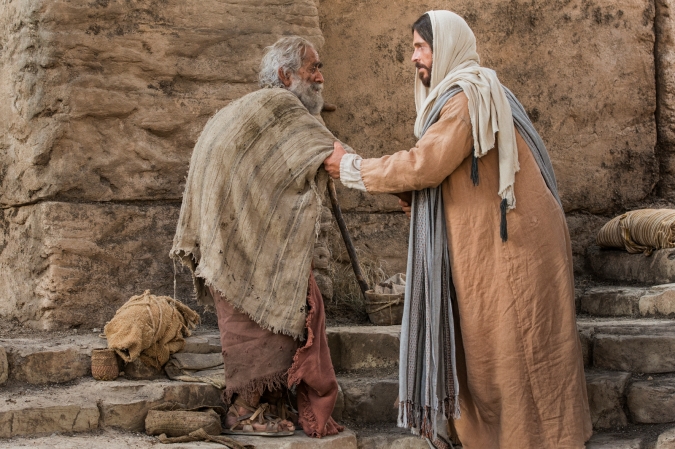

 Living "after the manner of happiness"