“…free to choose liberty or captivity…”
There are few people who can answer the question, “What is the purpose of life.” Even fewer who can answer the questions of where we came from and what happens after this life. Granted, there are myriad details about the heretofore and the hereafter that Mormons don’t know, but, relatively speaking, we know a lot.
Taking the Plan of Salvation—or “Plan of Happiness”—in rough chronological order from life before birth to life after death, we recently (in our YSA Seminar Series) identified 21 principles inherent in the plan. For each of these, we identified a statement to test our agreement of those principles. See which of them you agree with and which you think we got wrong. These principles help answer such difficult questions, “Why does God let horrible things happen to good—even to innocent—people?” “Why do people go to war in the name of religion?” And, “Why doesn’t God give me all the things I ask for?”
Family: I am a child in a large, eternal family. I have a father and a mother.
Nature of God: God has a physical body. He is perfect in his character and decision-making. He has the understandable motivations of a father and wants me to become like Him.
I Need to Grow: I am not like my heavenly parents in some ways. I lack an immortal body and I lack mastery of choosing right over wrong.
Mortality is Essential: To become like my heavenly parents, I must receive a body—even if only a temporary one for now—and I must master choosing right over wrong. To do this, I must come to earth.
The Veil: Even though I have long existed before mortality, I cannot access any memories of pre-mortal life while I am on the earth—and this is good.
Agency: In order to grow, each person must have freedom to make their own decisions.
Choice and Opposition: In order to make decisions, I must have choices between good and evil and I must be free to make them. In fact, I cannot make a good choice unless the possibility also exists for me to make a bad choice. I must be confronted with both good and bad.
Consequences: My ability to choose between good and evil would not be complete unless I am permitted to experience the full consequences—whether good or bad—of my choices.
Intervention: God may but is generally not likely to intervene and spare me from negative choices—or spare me from the negative choices of other people when I am innocent. He is not likely to step in and “fix” things for me.
Faith: Learning to make the best choices involves exercising faith—trusting in someone I cannot see, in a plan that cannot strictly be “proven” to me as true, and without a perfect knowledge that those choices will lead to the best outcome for me.
Sin and Death: All sins—any sin—separates me from God and disqualifies me from being with Him—period. Any sin on my part causes a spiritual “death” which separates me from God.
Justice: God is just and He administers justice. Justice cannot be cheated. He doesn’t bend or break the rules for me. This applies to both God the Father and God the Son.
Proxy: Within the rules of eternity, one person can stand in for another. Within the rules of eternal justice, one person can pay another person’s penalty—at least provided that the one paying the penalty is perfect or has god status.
Repentance: If I have acted in a way that separates me from God, the Savior can reconcile me back to Him if I change my heart, change my behavior, rely on the Savior, and re-orient myself toward following my Father in Heaven.
Mercy: God the Father—and God the Son—possess the attribute of mercy in its perfection. They are kind and generous without becoming unjust.
Grace: Jesus Christ has paid the penalty for our sins and is our judge. If we are to receive all the mercy He can give us, it will be solely because He offers us—and we receive—His grace.
Covenants: Covenants (which always include ordinances) are the means through which I qualify for Christ’s grace. I must make them under proper priesthood authority and keep them.
Time: Time matters! Though growth will continue after this life, this life is the time to prepare to meet God and there is a sense of urgency both to become the best I can and to help as many as I can.
Immortality: After this life, I will live, eventually with a resurrected body, and will never die.
Glory: After this life, I will live in a state of glory.
Eternal Life: If I keep make and keep the right covenants and thereby qualify for Christ’s grace, I will receive that grace and I will not only return to live with my Heavenly Parents, but I will become like them.
“…posterity, wisdom, joy, and influence.”
To what extent are followers of Christ obligated to not just follow but to lead? Must all followers of Christ lead? Can that leadership be passive? Can I get away with leading “merely” by example? Or must I lead with active intent?
What did the Savior say? Certainly his instruction to “let your light so shine” (on a conspicuous candlestick, no less) was aimed at all of His followers. Likewise his identification of disciples as “the salt of the earth” seems like an admonition to all. To Peter, he said, “strengthen thy brethren” and “feed my sheep.” Can we excuse ourselves from doing the same by thinking he was speaking exclusively to a priesthood leader? I don’t think so.
In a talk given in 2001, Sherry Dew described righteous women who inherit eternal life as enjoying “eternal increase in… influence”—as well as wisdom, joy, and posterity—all things we desire in this life and not merely the next. Influence is a desirable and worthy possession. We should strive to both acquire it and exercise it as best we can – for the purpose of leading others to Christ.
How do we acquire influence? We care. We accept. We love. We offer real encouragement (not nagging or riding). We make it personal. We get involved with others and build friendships. Introverts may need to overcome some things – though being the life of the party isn’t a requirement.
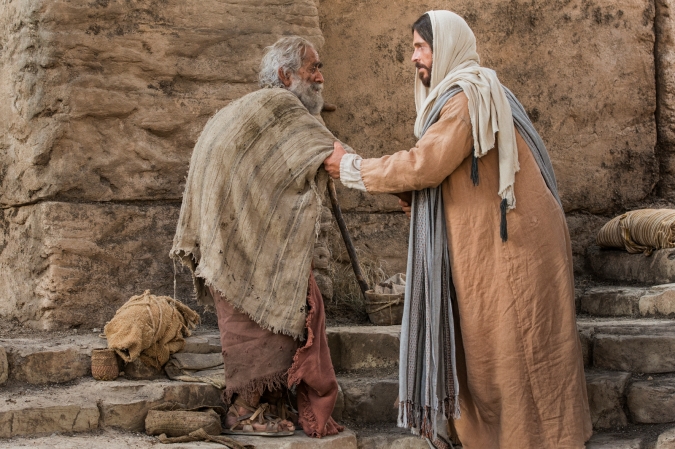
The Savior acquired influence by spending time with people. He reached out to those who particularly needed reaching out to. He walked and talked with people, asked them questions, and provided relief. He certainly set an unwavering example of devotion to His Father in Heaven and to principles of love and commitment. His consistent example provided authority for his words.
You and I must set an example, but we must also strive to do more. We should be with people providing sincere love, acceptance, support, and encouragement. We should even dare to teach in the right ways. We should strive to influence for good and be intentional about it. It isn’t enough to set an example and hope somebody catches on – though whatever example we set, good or bad, others will most certainly “catch on.” We must seek to acquire and exercise influence for good.
According to Church Handbook 2, “being a faithful disciple in order to help others become faithful disciples—is the purpose behind every calling in the Church.” Further, it says there are four specific things we can do:
- Remember names and become acquainted with people. (Moroni 6:4)
- Love without judging. (John 13:34-35)
- Strengthen individuals “one by one.” (3 Nephi 11:15 and 17:21)
- Build friendships and visit with people. (D&C 20:47)
Those are things we can do!
The challenge: Increase our own discipleship, but don’t wait to be perfect before reaching out to others. Identify the people we can influence and develop sincere love, interest, and caring for them. Strengthen relationships and in our relationships provide encouragement toward greater discipleship of the Savior. Be sincere enough in our efforts that these relationships will endure beyond the unwillingness of others to more fully embrace the Savior. We can do this. Doing so brings great rewards to all of us.

 Living "after the manner of happiness"